
Dry Needling Explained
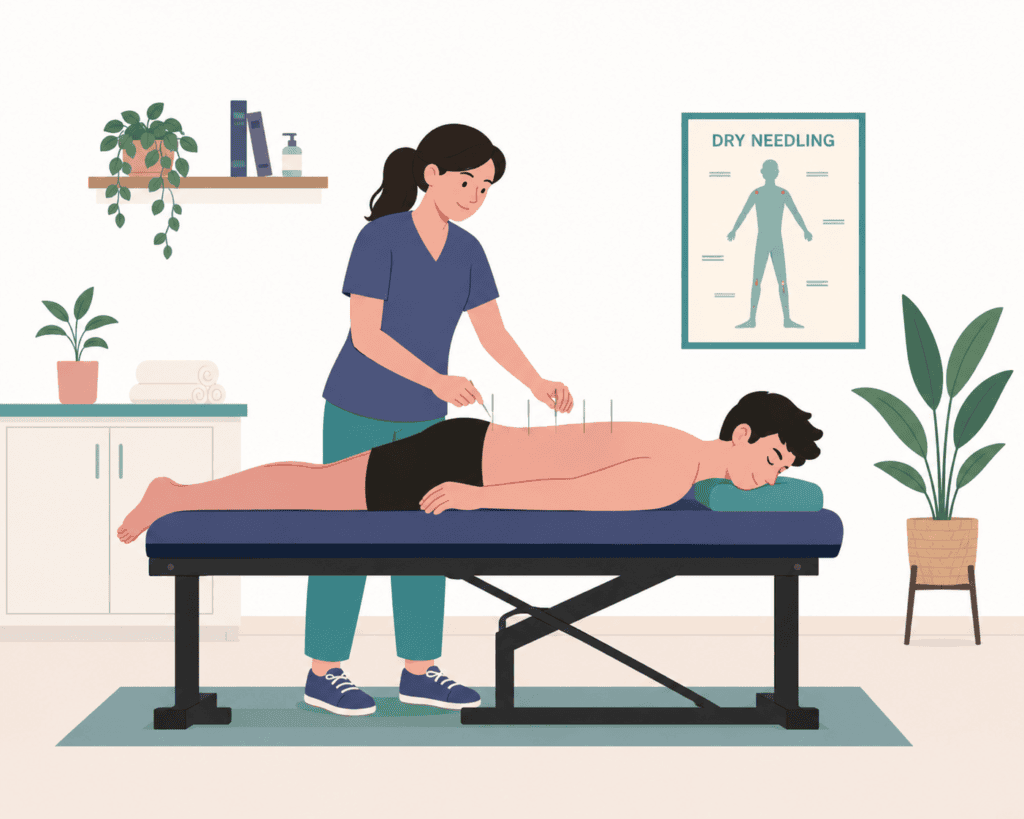
You might have seen it mentioned on a clinic website. Maybe a teammate raved about it after a stubborn calf finally let go. Or perhaps your osteopath suggested it last visit and you nodded along, not entirely sure what you were agreeing to.
Whatever brought you here, welcome. Let’s break it down.
Dry Needling, Explained Simply
Dry needling is a hands-on technique that uses fine, sterile, single-use needles to release tight, overactive muscles. The needle is inserted into specific points in the muscle to reduce tension, ease pain, and help the area move more freely.
It’s called “dry” needling because nothing is injected. The needle itself does the work, unlike a “wet” injection that delivers medication or fluid.
The needles are very thin, far finer than the ones used for blood tests or vaccinations. Most people are surprised by how little they feel.
How Does Dry Needling Actually Work?
When a muscle is overworked, injured, or held in tension for long enough, it can develop tight bands and tender spots known as trigger points. You might know them better as knots.
These trigger points can ache locally, restrict your movement, and sometimes refer pain to other areas entirely. A trigger point in your shoulder, for example, might be part of why you keep getting headaches.
Dry needling targets these points directly. Inserting a needle into a trigger point can prompt the muscle to relax, settle the local nerve activity, and improve blood flow to the area. Sometimes you’ll feel a brief twitch as the muscle releases. That’s normal, and usually a good sign.
The goal is simple: less tension, less pain, and better movement.
Is It the Same as Acupuncture?
This is the question we get most often, and it’s a fair one. The needles look similar, but the thinking behind them is quite different.
Acupuncture comes from traditional Chinese medicine and works with concepts like meridians and energy flow. Dry needling is grounded in Western anatomy and modern pain science. It’s based on muscles, nerves, and trigger points, not energy lines.
Same tool. Different map.
What Conditions Can Dry Needling Help With?
Dry needling is rarely used on its own. It works best as part of a broader treatment plan, alongside hands-on techniques and movement work. It can be helpful for people experiencing:
- Neck and shoulder tension
- Back pain and muscle tightness
- Headaches linked to muscle tension
- Sporting injuries and overuse strains
- Calf, hamstring, and glute tightness
- Jaw (TMJ) tension
- Restricted range of motion
It’s worth being honest here. Dry needling isn’t a magic fix, and it won’t suit every person or every problem. What it can do is take pressure off a tight, irritable muscle so the rest of your treatment and rehab can do their job.
What Does It Feel Like?
Most people feel a small pinch as the needle goes in, if they feel anything at all. Once it’s in place, you might notice a dull ache, a cramping sensation, or that brief muscle twitch as the trigger point releases.
It’s a strange feeling the first time, but rarely a painful one. We’ll always check in with you and adjust as we go.
Afterwards, it’s common to feel a little sore or tender in the area, a bit like you’ve done a workout. This usually settles within a day or so. Some people feel looser straight away.
What to Expect at Frame Osteopathy
At Frame, our approach is Comprehensive, Integrative, Supportive.
Dry needling is one of the tools we may use, but it’s never the whole plan. We’ll only suggest it if we think it’s the right fit for you, and we’ll always explain why before we begin. If you’d rather not have needling, that’s completely fine. There’s always another way to get you the result you’re after.
We’re also evidence-based. That means our use of dry needling is guided by current research and clinical reasoning, not habit. We’re continuously updating our knowledge so you receive the most effective care available.
Is It Safe?
When performed by a trained, registered practitioner using sterile, single-use needles, dry needling is very safe. Mild side effects like temporary soreness or minor bruising can happen, but serious complications are rare.
Your osteopath is university-trained and registered with AHPRA, the same body that registers your GP. We follow strict hygiene and safety standards every single time.
Is Dry Needling Right for Me?
If you’re dealing with stubborn muscle tension, a niggling injury, or pain that just won’t shift, it might be worth a conversation.
Dry needling suits a wide range of people and complaints, but the only way to know if it’s right for you is to be properly assessed. We’ll take the time to understand what’s going on and recommend what genuinely helps, needles or not.
We’re located at 37 Lynch Street, Hawthorn, just off Glenferrie Road. No referral needed.
Book online here, or give us a call on 03 9961 6000 if you’d like to chat first.